





MOVING DISEASE MODELLING TO A NEW LEVEL

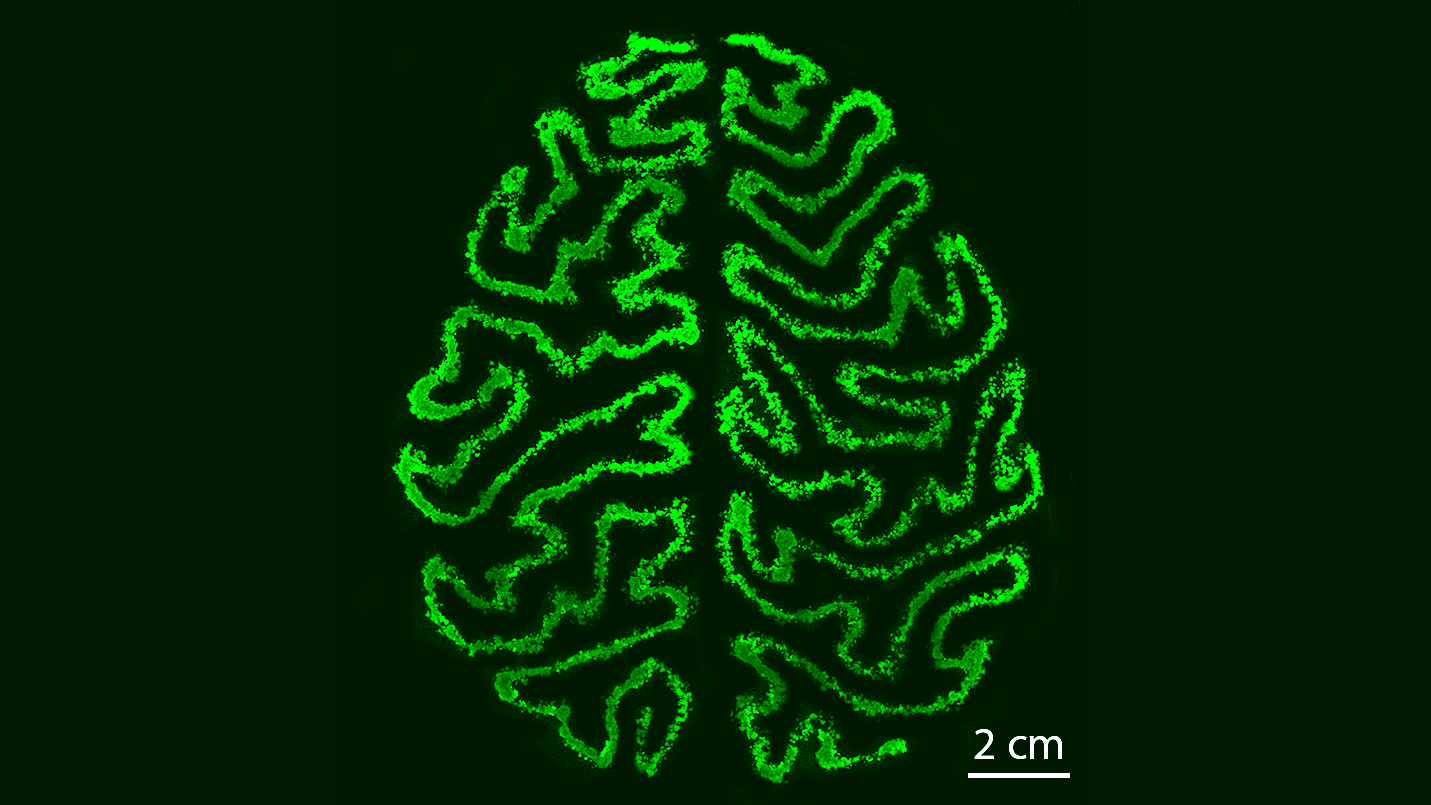
Brain illustration
Opto-Electronic Neural Connectoid Model Implemented for Neurodegenerative Disease
 European Innovation Council
OpenMIND is funded by the
HORIZON-EIC-2021-PATHFINDEROPEN-01 
Project 101047177 - Start date November 1, 2022
The OpenMIND project will move disease modelling to a new level and replace animal models, by creating a new concept we call connectoids. We will develop an ex-vivo-type in vitro human opto-electronic multi-regional brainorganoid disease model in which connectoids are formed by precise spatial arrangement of brain organoids connected via hydrogel tracts that promote axonal pathfinding, functional connection, and signalling.

By developing 1) light controllable sub-type specific neurons within regionalized brain organoids, and 2) electrodes and waveguides that can penetrate the organoids able to monitor neurotransmitter signalling inside and between the organoids, we will for the first time be able to sense how a particular brain region responds to a certain therapy and watch in real time how signals are transmitted to other brain regions. Our model will not only have health benefit, but will relieve a heavy economic burden on society, and open up for new possibilities for technological and economic development. 
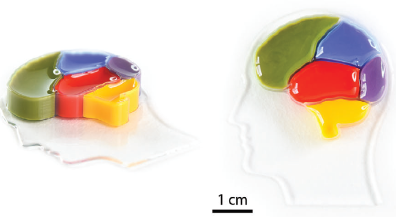
Brain print
3D printed neural stem cells

Background

A major challenge facing Europe is its ageing population and associated increase in diagnosed cases of neurodegenerative diseases (NDD). Parkinson’s disease (PD) is associated with tremor and loss of motor functions due to progressive degeneration of dopaminergic neurons in the brain. This can lead to memory loss and dementia, which is associated with short- and long-term injuries and disabilities with emotional, financial, and social burdens for patients, families, and society.

The exact causes and mechanisms underlying PD are still unknown and existing treatments focus on alleviating symptoms and increasing quality of life, but do not halt or reverse disease progression. Although animal models give unique possibilities to study physiological and behavioural mechanisms, drug development fails due to lack of translation to humans. Alternative non-animal NDD models is needed both in terms of better translation, but also to replace expensive and problematic animal experiments.
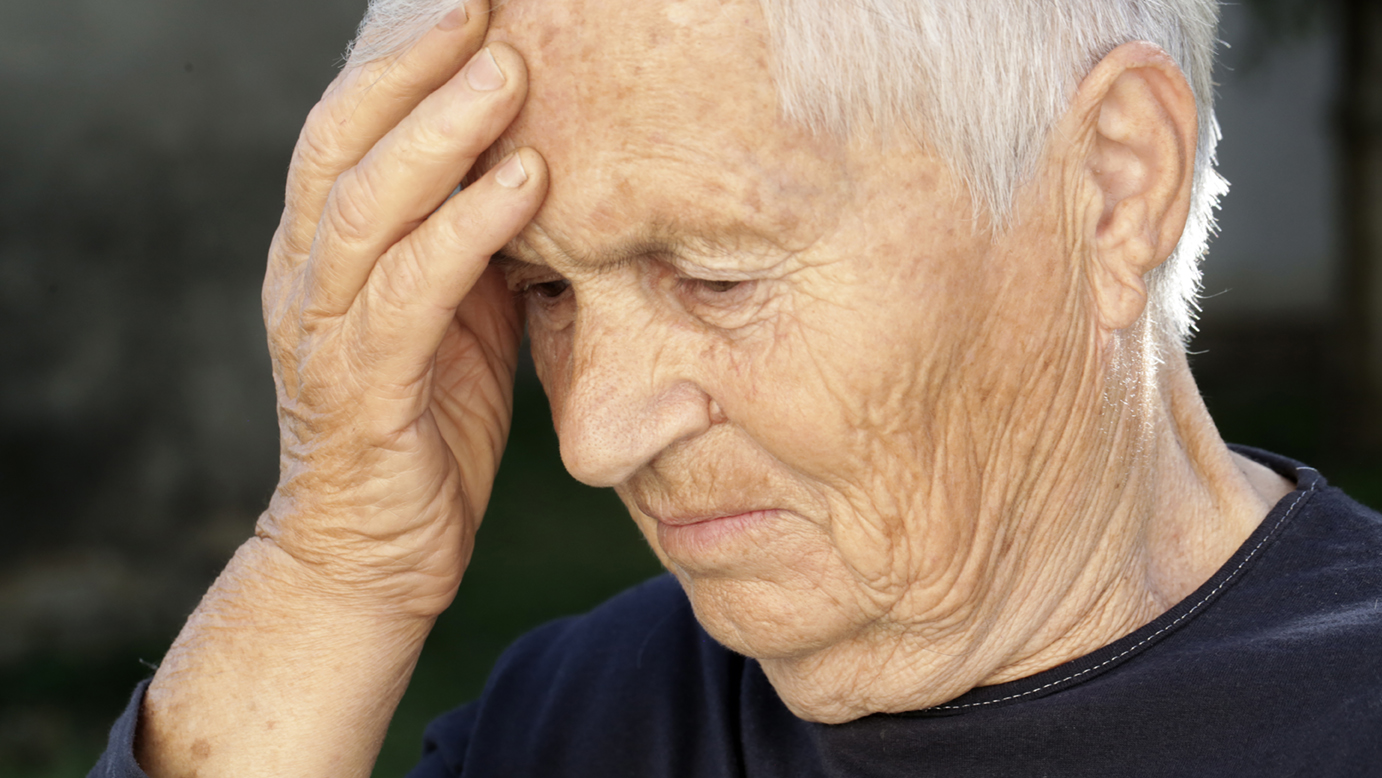
Elderly gentleman with dementia

News

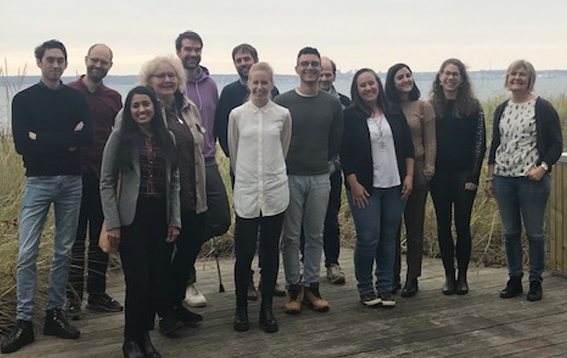
  • November 28th, 2022: Kick-off meeting of OpenMIND project in Denmark.
  • December 7th, 2022: Edoardo Sozzi presented a poster entitled: Investigating human dopaminergic - striatal neuron interactions with bioengineered multi-organoid systems at a Cold Spring Harbour conference in the US.
  • February 28th, 2023: The STEM-PD Team achieved an important result: The First patient receives milestone stem cell-based transplant for Parkinson’s Disease. Link to the news STEM-PD news. 
  • May 3rd, 2023: Edoardo Sozzi from Parmar group presented at Segerfalk Symposium on Brain Circuit Analysis, in a talk entitled: “Investigating human dopaminergic - striatal neuron interactions with bioengineered multi-organoid systems”. Link to the event Segerfalk Symposium.
  • May 15th, 2023: Malin Parmar gave a public talk on “Research without animals”. 
  • June 12th, 2023: Giorgio Scordo from the DTU team presents the 3D printing technology used in OpenMIND in a talk at ITS-Biotecnologie, Turin, Italy.
  • August 17th, 2023: BSc. Diego Martínez Esquivel from Tech Monterrey, Mexico starts to work with Cellink BioX on the topic: 3D printed organoid droplet in SHAPE bath.
  • August 27th-30th, 2023:  Stephan Sylvest Keller gave an oral talk: “Optoelectrical carbon devices as enabling tools for neuroscience”, presenting the potentials of SU8 optical waveguides combined with optogenetically modified neurons. Link to the news: European Biosensor Symposium.
  • September 13th, 2023: Marta Pereira attended 11th IBRO World Congress in Granada, showing the improvements in the organoid generation protocols.
  • September 15th, 2023: MSc. Stefan Sütlz successfully defended his Master Thesis entitled: "Direct-Ink-Writing 3D Printing of Microfluidic Guidance Devices for Nigrostriatal Connectoids".
  • September 22nd, 2023: The Dynamo journal published an interview with Jenny Emnéus entitled: “Hjernemodel åbner for at teste medicin mod Parkinsons sygdom“. Link to interview Dynamo_74.
  • October 11th, 2023: Edoardo Sozzi, a PhD student at ULUND, gave a Nextgen seminar in Lund entitled: Investigating human dopaminergic - striatal neuron interactions with bioengineered multi-organoid systems.
  • October 30th, 2023: A new master student, Rafael Romero Perez, has started his thesis with the UAM from December 2023 to January 2024, on ontogenetical modification on neurons.
  • November 21st, 2023: Jenny Emnéus (DTU) has received 5.2 M SEK from the Swedish Research Council (VR) with Malin Parmar as co-applicant (ULUND). The project is called HOPE - Human in vitro Opto-Electrical Parkinson´s Disease Model with a Gut Feeling, and is directly connected to OpenMIND, and aims at connecting OpenMIND with compartments that mimic the gut.
  • January 2nd, 2024: BIO X was used to 3D bioprint human neural tissues with functional connectivity. Link to paper 3D bioprinting of human neural tissues with functional connectivity.
  • March 8th, 2024: Giorgio Scordo from the DTU team presents the OpenMIND projects in a talk at ISM - Institute of Structure of Matter.
  • June 17th, 2024Giorgio Scordo from the DTU team presents the µPSL  techonolgy used in OpenMIND in a talk at ITS-Biotecnologie, Turin, Italy.
  • September 16th-19th, 2024: Samuel Maraschin gave a talk entitled "Real-time neurotransmitter detection from ventral mid-brain organoids confined in 3D cup-shaped pyrolytic carbon electrodes" at 50th International Micro and Nano Engineering Conference – MNE 2024.
  • October 16th, 2024: The ERC Synergy grant “CUSTOM-MADE Neurons for Cell Therapy in Parkinson’s and Huntington’s Disease” - 10M € - was awarded to Prof. Jenny Emnéus, Prof. Malin Parmar, Prof. Elena Cattaneo (UNIMIT, Milano, Italy), and Assoc. Prof. Annalisa Buffo (Project start November 1st, 2025).
  • November 10th-13th, 2024: Samuel Maraschin gave a talk entitled "Dynamic Monitoring of Neurotransmitter Release in Midbrain Organoids using Cup-Shaped Pyrolytic Carbon" at NanoBioTech-Montreux Conference, France.
  • January 13th to 14th, 2025: Jenny Emnéus and Stephan Sylvest Keller gave a Keynote lecture and Samuel Maraschin gave a talk, describing pyrolytic carbon, 3D printing and biofabrication for disease modelling of PD.
  • February 7th, 2025: Edoardo Sozzi (a PhD student in OpenMIND) successfully defended his PhD thesis with the title “Dissecting Dopaminergic Neuron Specification at Single Cell Resolution – Insight from 3D brain organoids and xenograft model”. Supervisor: Prof. Malin Parmar. Dept. of Experimental Medical Science, Faculty of Medicine, Lund University, Sweden. Opponent: Prof. Goncales Castelo-Branco, Karolinska Institute, Stockholm, Sweden. Link to the thesis Dissecting Dopaminergic Neuron Specification at Single Cell Resolution – Insight from 3D brain organoids and xenograft model.
  • May 15th-17th, 2025: Arto Heiskanen gave two Keynote lectures, describing engineering approaches in therapy and disease modelling of PD at Symposium of College of Medical Technology and College of Medicine at New Era University, Quezon City, the Philippines
  • July 15th, 2025: Prof. Jenny Emnéus is a partner in the MSCA Doctoral Network VISI-ON-BRAIN (Cutting-Edge Human In Vitro and In Silico Biomedical Tools on Brain Disorders. Project start January 1, 2026.
  • August 21th, 2025: The Nordic Organ on Chip (OoC) and Microphysiological Systems (MPS) Summer Workshop: “OoC/MPS Modelling Disease and Translation of OoC/MPS into industrial use & scaleup” was organised by Jenny Emnéus and her team at DTU Bioengineering. Link to the webpage Nordic-OoC-MPS 2025.
  • August 22th, 2025: The Hackathon on “AI and organoids toward Digital Twins” was organised by Jenny Emnéus and her team at DTU Bioengineering. Link to program Hackathon.
  • September 17th-19th, 2025: Arto Heiskanen gave a Keynote lecture, describing real-time monitoring of stem cell behaviour in disease modelling of PD (including neurotransmitter detection and optogenetics) at 6th Impedance-Based Cellular Assays conference (IBCA2025), Regensburg, Germany
  • November 2nd-6th, 2025: Samuel Maraschin gave a talk entitled "Real-time monitoring of dopamine release from midbrain organoids using pyrolytic carbon electrodes" at Miniaturized Systems for Chemistry and Life Sciences - Micro-Total Analysis Systems (µTAS 2025), Adelaide, Australia
  • May 5th, 2026: Samuel Tavares da Silva Maraschin (PhD student in OpenMIND) will defend his thesis with the title “Microfabrication of 3D Electrodes for Neurotransmitter Detection in 3D Brain-on-a-Chip Systems. Supervisors: Jenny Emnéus & Arto Heikanen (DTU Bioengineering) and Stephan S. Keller (DTU Nanolab). Examiners: Prof. Anna Herland (Karolinska Institute/KTH, Sweden), Prof. Jürgen Brugger (EPFL, Switzerland) and Assoc. Prof. Ada-Ioana Bunea (DTU Nanolab). 
Events
portrait

Kick-off meeting

L

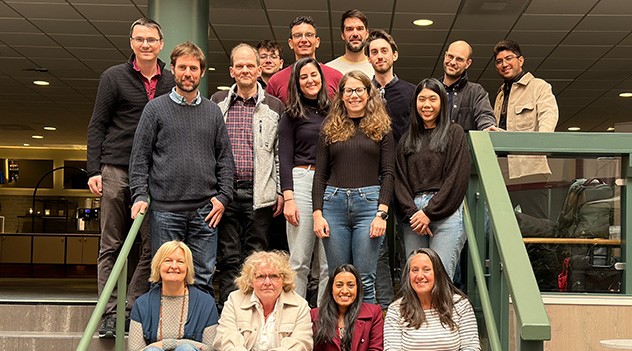
6th month meeting

DTU

14th month meeting

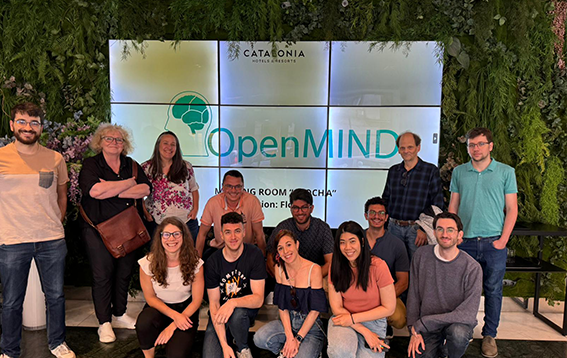
19TH MONTH MEETING

Final Face to face meeting

Publications
  1. Kajtez, J., Radeke, C., Lind, J. U., & Emnéus, J. (2023). Microgel-extracellular matrix composite support for the embedded 3D printing of human neural constructs. Journal of Visualized Experiments, 195, e65158. DOI: 10.3791/65158
  2. Støvring, N., Rezaei, B., Heiskanen, A., Emnéus, J., & Keller, S. S. (2024). Fabrication of pyrolytic carbon interdigitated microelectrodes by maskless UV photolithography with epoxy-based photoresists SU-8 and mr-DWL. Micro and Nano Engineering, 23, 100257. DOI: https://doi.org/10.1016/j.mne.2024.100257
  3. Rezaei, B., Giacomoni, J., Nilsson, F., Sozzi, E., Fiorenzano, A., Parmar, M., ... & Kajtez, J. (2024). Modular 3D printed platform for fluidically connected human brain organoid culture. Biofabrication, 16(1), 015014. DOI: 10.1088/1758-5090/ad0c2c
  4. Støvring, N., Heiskanen, A. R., Emnéus, J., & Sylvest Keller, S. (2025). Electrochemical Redox Cycling with Pyrolytic Carbon Stacked-Layer Nanogap Electrodes. ACS Applied Materials & Interfaces, 17(9), 14375-14388. DOI: doi.org/10.1021/acsami.4c18998
  5. Sozzi, E., Corsi, S., Bruzelius, A., Scordo, G., Tavares da Silva Maraschin, S., Thongkorn, S., ... & Parmar, M. (2025). Reconstruction of the human nigrostriatal pathway in vitro reveals target-dependent dopamine neuron maturation. bioRxiv, 2025-12. DOI: doi.org/10.64898/2025.12.23.696164
  6. Scordo, G., Kanellopulos, K., Thongkorn, S., Maraschin, S. T. D. S., Ghaseminasab, K., Shkondin, E., ... & Emnéus, J. (2025). 3D printed waveguides for optogenetics applications: design optimization and optical characterization. arXiv preprint arXiv:2511.15420. DOI: doi.org/10.48550/arXiv.2511.15420


Master thesis offers
3d printing

3D embedded printing

SharePoint


Project Resources

Go to Sharepoint site

Funding

This project is generously funded by the European Innovation Council under the Pathfinder program.
Grant number: 101047177